Painter Embroidery Design Review
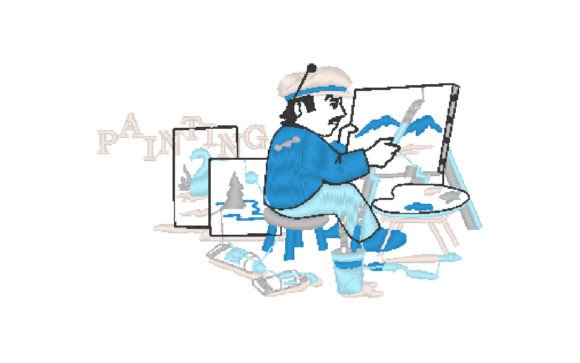
As an experienced embroidery designer, I’ve had the opportunity to work with countless machine embroidery designs, but few have caught my attention quite like Painter. This digital embroidery file offers a unique blend of creativity and practicality, making it ideal for small business merch, branded patches, and custom apparel. Whether you're running a boutique, a handmade shop, or a local café, Painter has the potential to elevate your brand’s visual identity while maintaining a professional and cohesive look.
The First Impression: A Creative and Versatile Design
From the moment I viewed Painter, it felt like a design that could bridge the gap between artistic expression and commercial use. The title itself suggests a sense of craftsmanship and creativity, and the description hints at its versatility. This embroidery file appears to be both friendly and bold, with a style that leans toward the modern yet retains a touch of elegance. It’s not overly ornate, which makes it suitable for a wide range of applications without overwhelming the fabric it’s stitched onto.
One of the standout features of Painter is its ability to add an adorable accent to any fabric. This makes it perfect for small business merch, especially for brands that want to infuse a playful or artisanal feel into their products. Whether used as an embroidered patch, a chest logo, or a sleeve detail, it can serve as a subtle yet effective branding element.
Real Business Use: From Patches to Tote Bags
When considering how Painter performs in real-world scenarios, it shines as a versatile machine embroidery design. For small businesses looking to create custom apparel, this file can be used on staff uniforms, aprons, caps, and tote bags. Its design allows for clear visibility even on larger surfaces, making it a great choice for event merch or customer gifts.
For Etsy sellers and craft businesses, Painter could be a valuable addition to their product line. It’s well-suited for embroidered patches, which are popular among handmade brands and boutique merchandise. As a printed mockup, it can also help clients visualize how the final product will look before production begins.
One area where Painter truly excels is in its adaptability. It can be scaled down for smaller patches or expanded for larger designs, depending on the project’s needs. This flexibility is essential for businesses that require consistent branding across multiple items, from work shirts to product packaging accents.
Where to Use Painter Carefully
While Painter is a strong design, there are certain situations where caution is advised. For instance, when using it on small patch sizes, the details may become too delicate or lose clarity. Similarly, if you plan to use it on a cap front or curved surface, you’ll need to ensure that the design is properly adjusted for those shapes.
High stitch density and detailed outlines could pose challenges on textured fabrics or dark uniforms. In such cases, it’s important to test the design on the actual fabric before committing to large-scale production. Additionally, if the design includes tiny lettering, you should verify that it remains legible at the intended size.
Another consideration is the hoop size required for this design. If the file is large, it may necessitate a larger hoop than what some machines can accommodate. Always check the specifications before proceeding with any project.
Impact on Brand Identity and Customer Perception
Brand identity is crucial for small businesses, and Painter can play a significant role in shaping that identity. When used consistently across different items—such as apron embroidery, cap embroidery, or tote bag design—it helps reinforce recognition and trust among customers. A well-executed embroidered logo or accent can elevate the perceived value of a product, making it more appealing to buyers.
Moreover, Painter adds a level of professionalism to any handmade product or custom apparel. It bridges the gap between mass-produced items and artisanal creations, offering a polished look that still feels personal. This balance is key for businesses aiming to stand out in a competitive market.
For commercial embroidery projects, the design’s consistency and clarity make it an excellent choice. It ensures that every finished product maintains a high standard of quality, which is essential for maintaining customer satisfaction and repeat business.
Practical Designer Notes for Using Painter
Before jumping into production, there are several steps every embroidery designer should take. First, test Painter in black and white to see how it looks on different fabric textures. This can reveal issues with contrast or visibility that might not be obvious in color.
Next, review how the design looks at a small patch size. If the details are too fine, consider simplifying the design or adjusting the scale. Also, inspect the spacing between elements to ensure they don’t appear crowded or distorted when stitched.
Always confirm the stabilizer type needed for the fabric you’re working with, and make sure the thread colors complement the background fabric. A printable mockup can be invaluable for client approval, allowing them to see the final result before production begins.
Finally, compare Painter with other design assets to ensure it fits within your overall branding strategy. And most importantly, check the commercial licensing terms before using it for business purposes.